
A Charlotte homeowner once called because the upstairs bedrooms stayed noticeably warmer than the rest of the house, even though the air conditioner seemed to run almost constantly. The first assumption was an aging HVAC unit. Once the supply registers and accessible ductwork were inspected, however, there was a substantial layer of dust and debris inside portions of the system, along with buildup around several registers. The equipment itself was still operating, but the air distribution side had clearly been neglected.
That distinction matters. Delaying duct cleaning does not automatically mean your furnace or air conditioner will fail, and dirty ducts are not responsible for every comfort problem. But when enough debris accumulates in the air distribution system, it can contribute to conditions that make an HVAC system less effective at doing its job.
For residents considering Air Duct Cleaning Charlotte, NC, the better question is not simply whether the ducts look dusty. It is whether contamination inside the system is affecting airflow, recirculating debris, or creating conditions that deserve professional attention.
Charlotte’s climate makes HVAC maintenance particularly relevant. Air conditioning can work hard through long stretches of warm weather, while seasonal changes bring pollen and other outdoor particles that can enter living spaces. National Weather Service climate records confirm Charlotte’s extended warm-season conditions, which means cooling equipment can see substantial annual use. Residents who are unsure what their system needs can explore professional duct cleaning options for cleaner air distribution before assuming that replacing HVAC equipment is the answer.
Delayed Air Duct Cleaning Can Allow Debris to Accumulate
A duct system moves a large volume of conditioned air through a building over the course of a year. Dust that settles inside does not necessarily create an immediate problem. What deserves attention is heavier accumulation, especially when debris is also present around registers, return openings, or other accessible HVAC components.
Think about what happens inside a typical residence. Doors open and close, people and pets move through rooms, renovation projects create fine particles, and outdoor material makes its way indoors. Some particles are captured by the HVAC filter. Others settle on surfaces or may enter the return-air side of the system.
During an inspection, removing a return grille can sometimes tell a useful story. A light coating of ordinary household dust is very different from thick buildup containing construction debris, pet hair, or material that has accumulated over years. That is why Air Duct Cleaning should be based on actual system conditions rather than an arbitrary calendar date.
Professional cleaning is also more involved than vacuuming the visible portion behind a vent cover. Proper work addresses relevant components of the air distribution system rather than simply making the first few inches of ductwork look cleaner. Homeowners who want to understand what is involved can review the complete professional cleaning process and compare it with what a contractor is proposing.
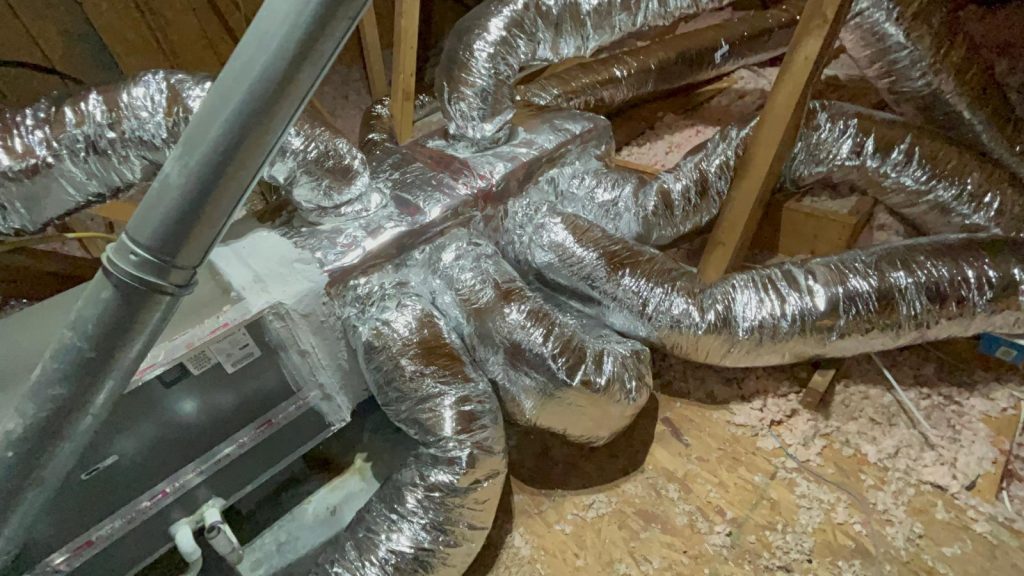
Your HVAC System May Have to Work Around Airflow Problems
One of the most noticeable complaints associated with an air distribution problem is inconsistent comfort. A bedroom may feel warmer than the hallway. One register may deliver noticeably less air than another. The thermostat reaches its setting slowly, so the system seems to stay on longer than expected.
Dirty ductwork can be part of that picture, but it is important not to blame every airflow problem on dust.
A heavily loaded filter, crushed flexible duct, disconnected duct section, closed damper, dirty indoor coil, undersized return, or mechanical problem can produce similar symptoms. Experienced technicians look at the entire situation before recommending HVAC Air Duct Cleaning Charlotte as the solution.
This is where an inspection has more value than guessing.
For example, if a homeowner reports weak airflow from one room while every other register performs normally, cleaning the entire system without investigating that branch first would make little sense. There may be a damaged or restricted duct instead. If several registers show significant debris and the interior duct surfaces have visible buildup, professional cleaning becomes a much more reasonable recommendation.
That practical approach is consistent with industry guidance that focuses on evaluating the HVAC system as a whole. The National Air Duct Cleaners Association professional directory also provides a way for consumers to verify a contractor’s NADCA affiliation rather than relying only on advertising claims.
For Charlotte residents, this becomes particularly useful during warmer months when cooling equipment is already carrying a substantial workload. If certain rooms are uncomfortable or airflow has changed, see how local Charlotte duct specialists approach HVAC cleaning before deciding whether buildup, duct damage, or another system issue is responsible.
Dust Can Keep Circulating Through the Living Space
When debris remains inside ductwork for a long time, the concern is not simply that the ducts look dirty. The more practical issue is what happens when the HVAC system starts moving air again.
A homeowner may clean a coffee table or television stand and notice a fresh layer of dust returning sooner than expected. Another common complaint is visible material collecting around supply registers. Neither situation proves that the ductwork needs cleaning, but both are good reasons to look beyond the surfaces you can see.
On one service visit, a family had been replacing filters regularly but still noticed dark dust collecting around several ceiling registers. Inspection showed that the filter was not the main issue. Older debris remained in portions of the ductwork, and gaps around accessible register connections were also allowing material from surrounding areas to enter. Cleaning addressed the accumulated material, while sealing the problem areas helped deal with the source instead of treating only the symptom.
The practical takeaway is simple: Professional Air Duct Cleaning Charlotte should address actual contamination and its possible sources. Cleaning alone cannot correct a loose connection, damaged duct, or filtration problem.
If dust keeps returning around vents despite normal cleaning, it may be worth having the system evaluated through a complete air duct cleaning and inspection service rather than repeatedly cleaning the register covers.
Delayed Cleaning Can Make Existing Duct Problems Harder to Recognize
Heavy debris can sometimes distract from problems that matter more than the dirt itself.
Flexible ductwork can become compressed. Connections can loosen. Insulation may deteriorate. Return-side leaks can pull unwanted particles from attics, crawlspaces, or other unconditioned areas. A register boot may have gaps around its connection. These conditions require different solutions, and none should automatically be treated as a cleaning problem.
This is one reason Air Duct Cleaning Services Charlotte, NC should begin with an evaluation of the system rather than an immediate assumption that every duct needs the same treatment.
A technician inspecting an older system may discover, for example, that one branch contains noticeably more debris than the others. That uneven pattern raises a useful question: why is contamination concentrated there? Sometimes the answer is simply the layout of the system. In other cases, a damaged connection or opening may be allowing material to enter.
Cleaning without identifying that condition could leave the homeowner dealing with the same problem later.
Charlotte has a wide mix of housing types and ages, so duct configurations can vary considerably from one residence to another. Someone dealing with persistent dust, uneven comfort, or unusual vent conditions can request a professional evaluation of the duct system before deciding whether cleaning, repair, or another HVAC service makes the most sense.

Filters Still Matter Even After Professional Cleaning
Duct cleaning and filtration perform different jobs.
Cleaning removes accumulated material from appropriate HVAC components and duct surfaces. A filter helps capture airborne particles as air returns to the heating and cooling equipment. Cleaning neglected ductwork while continuing to use an unsuitable, damaged, or overdue filter does not address the ongoing maintenance side of the system.
One of the simplest things a resident can do is check the filter routinely rather than assuming it will last for a specific number of months. Filter loading depends on the building, occupancy, pets, renovation activity, equipment runtime, and the type of filter being used.
A filter that looks heavily loaded sooner than expected is useful information.
The opposite situation deserves attention too. If a filter remains unusually clean while substantial dust appears around the building, a technician may want to check whether air is bypassing the filter because of poor fit or another return-side issue.
This is why Residential Air Duct Cleaning Charlotte, NC works best as part of sensible HVAC maintenance rather than as a substitute for it. The goal is not to make the inside of a duct system permanently spotless. That is unrealistic. The goal is to address meaningful accumulation while reducing the conditions that allow excessive debris to return.
Residents looking at their overall maintenance needs can review Charlotte-specific air duct care options while considering filtration, equipment condition, and duct cleanliness together.
Dryer Vent Maintenance Should Not Be Confused With Air Duct Cleaning
Air ducts and dryer vents are sometimes discussed as though they are the same system. They are not.
HVAC ducts distribute heated or cooled air throughout the building. A dryer vent carries hot, moisture-laden exhaust and lint from the clothes dryer to the exterior. The materials inside them are different, and so are the reasons they may need professional attention.
This distinction becomes important when someone says, “I had my vents cleaned,” but cannot remember exactly what was serviced.
During a maintenance conversation, a technician may discover that the HVAC ducts were addressed recently while the dryer exhaust line has gone untouched for years. Another household may have done the opposite. Each system needs to be evaluated independently.
Warning signs on the dryer side include clothes taking longer than usual to dry, the appliance becoming unusually hot, or weak exhaust at the exterior termination. Those symptoms should not be expected to improve because the HVAC ducts were cleaned.
For anyone experiencing those separate issues, professional dryer vent cleaning can address lint and exhaust restrictions without confusing the service with Air Duct Cleaning Charlotte.
Keeping the two systems separate in your maintenance plan leads to better decisions. It also makes conversations with contractors clearer because everyone understands exactly which part of the building is being inspected or serviced.
Waiting Too Long Can Make Cleaning More Involved
There is a practical difference between removing moderate accumulation and dealing with a system that has been neglected through years of occupancy, remodeling, pet activity, or other sources of debris.
Consider what happens during a renovation. Drywall sanding and flooring work can produce extremely fine particles. Even when contractors cover registers, dust may still travel through occupied areas and reach return openings. If the HVAC equipment operates during the project, some of that material can move through the air distribution system.
A technician opening an accessible return after remodeling may find a layer of fine construction dust that looks very different from normal household accumulation. Simply replacing the filter afterward does not remove material that has already settled farther inside the ductwork.
That is one reason delaying Air Duct Cleaning after a known contamination event can make the eventual job more involved. The technician first needs to determine where the material has traveled, which components are affected, and whether cleaning is actually appropriate for the duct materials installed.
Professional standards matter here. NADCA explains that proper HVAC cleaning involves more than working around visible registers and emphasizes cleaning practices that address relevant components of the system. Homeowners can verify Pristine Air Duct Cleaners through NADCA’s professional directory when evaluating qualifications for this type of work.
If renovation dust or years of accumulated debris are visible inside accessible ductwork, explore a complete professional duct cleaning approach rather than relying on surface vacuuming around the vents.
Charlotte’s Climate Can Increase HVAC Runtime and Maintenance Needs
Charlotte’s weather matters because the amount of time heating and cooling equipment operates affects how much air moves through the system.
Summers are warm and humid, and air conditioning can run frequently for extended periods. Spring also brings significant pollen into the region. Opening doors and windows, pets moving indoors and outdoors, and normal daily traffic can bring outdoor particles inside. Once indoors, some material settles on surfaces while some reaches the HVAC return.
This does not mean Charlotte residents automatically need duct cleaning every spring or after a certain number of cooling seasons. There is no responsible one-size-fits-all schedule.
A better approach is to pay attention to the building itself.
For instance, a recently constructed residence with good filtration, sealed ducts, no pets, and no renovation activity may have relatively little buildup. An older property with several occupants, pets, previous construction work, and leaky return connections may tell a completely different story.
The difference becomes obvious when registers are removed for inspection. One system may show only a thin layer of settled dust, while another has visible debris extending beyond the register opening. The second condition gives a technician a stronger reason to investigate further.
For local residents wondering whether their equipment has been affected by Charlotte’s long cooling season or seasonal debris, explore professional duct care available throughout Charlotte to understand when an inspection may be worthwhile.
When Is Professional Air Duct Cleaning Actually Worth Considering?
The calendar should not make this decision for you.
Instead, look for a combination of conditions that gives you a practical reason to have the ductwork inspected. Visible buildup inside accessible ducts is one. Debris repeatedly appearing around registers is another. Recent remodeling, contamination from construction work, evidence that material has entered through damaged ductwork, or purchasing an older property with an unknown maintenance history can also justify a closer look.
Another situation comes up after HVAC repairs. A resident may have a mechanical problem corrected but still notice debris around certain registers afterward. At that point, inspecting the distribution system can determine whether contamination remains or whether another issue is responsible.
The same applies to inconsistent airflow. If one room is uncomfortable, do not assume duct cleaning will fix it. If multiple areas have changed and visible contamination is present, however, a broader system evaluation becomes more reasonable.
A proper Professional Air Duct Cleaning Charlotte service should therefore begin with questions. What prompted the call? When did the problem start? Has there been recent construction? Are all rooms affected? How old is the equipment? What does the accessible ductwork actually look like?
Those answers help separate a genuine cleaning need from an unrelated HVAC problem.
Residents who are unsure which situation applies can schedule a professional assessment of their air distribution system before committing to work that may not address the underlying concern.
What Should You Expect From Professional HVAC Air Duct Cleaning?
A homeowner should expect more than someone putting a small vacuum hose through each register.
Good HVAC Air Duct Cleaning Charlotte starts by understanding the system layout and evaluating accessible components. The technician needs to consider the return side, supply side, registers, and other relevant areas before deciding how the system should be cleaned.
Access and containment matter because loosened debris should be controlled rather than released into occupied rooms. The equipment used should also be appropriate for the duct material. Flexible duct, sheet metal, and internally lined components cannot always be treated exactly the same way.
A service call illustrates why that matters. In one property, a resident expected every duct branch to contain the same amount of dirt because several registers looked dusty. Once inspected, most branches had relatively light accumulation. The heavier debris was concentrated near a return area that had been exposed during previous renovation work. Instead of treating every visible speck as evidence of a severe system-wide problem, the inspection helped identify where attention was actually needed.
That is the kind of distinction experienced technicians should make.
Industry credentials can also help residents evaluate contractors. Pristine Air Duct Cleaners is listed in the NADCA professional directory for qualified duct cleaning providers, giving consumers an external source for checking professional affiliation rather than relying solely on company claims.
For a clearer idea of what should be included before scheduling work, review the complete air duct cleaning process and service approach.
The Best Time to Address Duct Buildup Is When the Evidence Supports It
There is no benefit in cleaning ductwork simply because a certain number of months or years have passed. At the same time, visible contamination, renovation debris, persistent material around registers, or an unexplained change in air distribution should not be ignored indefinitely.
The most useful starting point is observation. Remove an accessible register if it can be done safely and look just beyond the opening. Check whether the HVAC filter is loading unusually quickly. Pay attention to rooms that have become harder to heat or cool. Think about recent remodeling, previous occupants, pets, or periods when the system operated during dusty construction work.
Those details give a technician something meaningful to investigate.
One inspection involved a property where the owner assumed years of delayed cleaning had damaged the HVAC equipment because the system seemed to run constantly. The ductwork did contain accumulated debris, but the inspection also uncovered a separate air distribution issue. Cleaning addressed the contamination, while correcting the other problem addressed the comfort complaint. Had the owner treated Air Duct Cleaning Charlotte as the only solution, part of the problem would have remained.
That experience highlights an important point: professional duct cleaning should be based on evidence and should complement proper HVAC maintenance, not replace diagnosis.
Residents dealing with visible buildup can explore a thorough air duct cleaning service designed around actual system conditions. If lint buildup or slow drying is a separate concern, address dryer exhaust maintenance with the appropriate vent cleaning service rather than assuming the two systems require the same treatment.
For local properties, review air duct cleaning support available throughout Charlotte to understand how regional conditions and individual system history can influence maintenance decisions.
Pristine Air Duct Cleaners provides Air Duct Cleaning Services Charlotte, NC, and its professional credentials can be independently checked through the NADCA contractor directory. That type of verification is useful when comparing contractors because proper cleaning requires appropriate equipment, methods, and an understanding of the complete air distribution system.
The practical lesson is to respond to what the system is telling you. Dust alone does not prove that duct cleaning is necessary, and delayed cleaning does not automatically mean HVAC damage has occurred. Visible contamination, changing performance, unusual debris, or a known contamination event are stronger reasons to arrange an inspection.
If those signs are present, schedule a professional duct system evaluation before deciding what work is actually necessary.
FAQ Section
1. What happens if I wait too long to clean my air ducts?
Debris can continue accumulating inside portions of the air distribution system. Depending on the amount and source, you may notice dust around registers or changes in air distribution. Delaying cleaning does not automatically damage HVAC equipment, so an inspection is the best way to determine whether buildup is significant. You can have the condition of your ductwork professionally evaluated if visible debris or performance changes are causing concern.
2. Can dirty air ducts make my HVAC system work harder?
They can contribute to problems when contamination or restrictions become significant, but dirty ducts are not the only possible cause. Loaded filters, damaged ductwork, dirty HVAC components, closed dampers, and mechanical issues can also affect performance. A complete duct cleaning and system evaluation can help distinguish contamination from other possible problems.
3. How do I know whether my air ducts actually need cleaning?
Look for visible accumulation inside accessible ductwork, recurring debris around registers, contamination following renovation work, or other clear evidence that material has entered the system. An unexplained change in air distribution may also justify an inspection. Avoid choosing Residential Air Duct Cleaning Charlotte, NC based solely on how long it has been since the previous cleaning.
4. How often should air ducts be cleaned in Charlotte?
There is no schedule that is appropriate for every property. Occupancy, pets, filtration, renovation history, duct condition, and HVAC usage all influence how quickly material accumulates. Charlotte’s long cooling season can mean substantial system runtime, but that alone does not mean ducts need cleaning annually. Residents can explore local Charlotte duct maintenance options when visible conditions suggest an inspection is appropriate.
5. Does air duct cleaning remove all dust from my house?
No. Household dust comes from many sources, including clothing fibers, outdoor particles, pets, daily activity, and material brought indoors. Air Duct Cleaning addresses appropriate HVAC and duct components when contamination is present. It should not be presented as a way to eliminate all household dust.
6. Can I clean my HVAC ducts myself?
Cleaning a removable register cover is different from cleaning an entire air distribution system. Professional work may require specialized access, containment, negative-pressure equipment, and tools appropriate for the duct material. Improper methods can leave debris behind or disturb components unnecessarily. Review how professional duct cleaning is approached before deciding whether the work goes beyond basic household maintenance.
7. Should I clean my air ducts after remodeling?
It may be worthwhile if the HVAC system operated during dusty construction or if visible renovation debris entered returns or duct openings. Drywall sanding, cutting, flooring work, and demolition can generate fine material that travels beyond the immediate work area. An inspection can determine whether professional cleaning is justified.
8. Is dryer vent cleaning included with air duct cleaning?
Not necessarily. The dryer exhaust and HVAC air distribution system serve different purposes and require different maintenance. If clothes are taking longer to dry or exhaust seems restricted, consider professional dryer vent cleaning for the separate exhaust system.
9. What should I look for when choosing an air duct cleaning company?
Look for clear explanations of the cleaning process, appropriate equipment, realistic claims, and recognized industry credentials. Be cautious of contractors who diagnose a serious problem without examining the system or promise unrealistic results. Consumers can also use the NADCA professional directory to verify industry credentials when comparing providers.
10. Where can I get professional Air Duct Cleaning Charlotte, NC?
Pristine Air Duct Cleaners serves Charlotte-area properties and provides professional duct cleaning based on the condition of the air distribution system. If you have visible buildup, renovation debris, recurring material around vents, or concerns about your ductwork, schedule an inspection with a Charlotte air duct professional to determine what the system actually needs.