
Dust is part of everyday life. It comes into the house on shoes, clothing, pets, groceries, and even through open doors and windows. Most people expect to wipe it off furniture or vacuum it from the floors, but few stop to think about where it goes once it’s pulled into the return vents of the heating and cooling system.
One inspection in Charlotte comes to mind whenever this question is asked. A homeowner had recently replaced their flooring and was frustrated that every room still seemed dusty weeks after the project was finished. They assumed the contractor hadn’t cleaned thoroughly before leaving. After inspecting the HVAC system, the explanation became much clearer. Fine drywall dust and wood particles had been drawn into the return ducts during the renovation. While the larger debris had settled inside the ductwork, finer particles continued circulating each time the system turned on. Cleaning the affected sections helped reduce the dust that had been repeatedly moving through the house.
Situations like this show that dust doesn’t simply disappear after entering the duct system. It follows a path through filters, equipment, and ductwork before eventually settling somewhere else or being removed from the system. Understanding that process helps explain why keeping the entire HVAC system maintained is just as important as cleaning the visible parts of the house.
If you’ve never had your ductwork inspected, understanding how a professional air duct cleaning service works provides helpful background before exploring where dust travels once it enters the system.
Every Heating and Cooling Cycle Moves More Than Just Air
Many people imagine their HVAC system only moving heated or cooled air from one room to another. In reality, every cycle also moves thousands of tiny airborne particles that naturally exist inside a home.
Those particles may include:
- Skin cells
- Pet dander
- Carpet fibers
- Fabric lint
- Pollen
- Cooking residue
- Outdoor dust
- Fine construction debris
As air returns to the HVAC equipment, these particles travel with it. Some are trapped by the air filter, while others continue moving through different sections of the system before eventually settling.
This process happens every day without anyone noticing because nearly all of it occurs behind walls, above ceilings, or beneath floors.
Dust Doesn’t All End Up in One Place
One of the biggest misconceptions is that every bit of dust entering the vents collects inside one section of ductwork.
That’s rarely what technicians discover during inspections.
Larger particles often settle where airflow slows around turns and branch connections. Fine debris may continue circulating through several heating and cooling cycles before eventually reaching the filter or settling elsewhere inside the system.
The amount of buildup also depends on several factors, including:
- The age of the HVAC system
- Filter maintenance
- Indoor activity levels
- Pets
- Previous remodeling projects
- How frequently the heating and cooling equipment operates
Every property develops its own pattern over time, which is why no two duct systems look exactly alike during an inspection.
Charlotte’s Climate Influences What Enters the Ductwork
Living in Charlotte means the HVAC system works through long, hot summers, changing spring weather, and periods of high humidity. That extended operating season naturally moves more indoor air through the ductwork than areas with shorter cooling seasons.
Spring pollen is another factor local residents know well. Even when windows stay closed, pollen finds its way indoors on clothing, shoes, and pets before eventually becoming part of the air circulating throughout the house.
Humidity can also cause fine dust to cling to interior surfaces more easily instead of remaining suspended in the air. Over time, that combination of everyday household dust, seasonal pollen, and moisture creates different buildup patterns than technicians might find in drier climates.
Understanding these local conditions helps explain why Air Duct Cleaning Charlotte, NC is often discussed as part of routine home maintenance rather than simply a one-time service.
Why Your Air Filter Can’t Catch Every Particle
A common belief is that once dust reaches the air filter, the problem is solved. Filters certainly play an important role, but they are only one part of the entire HVAC system.
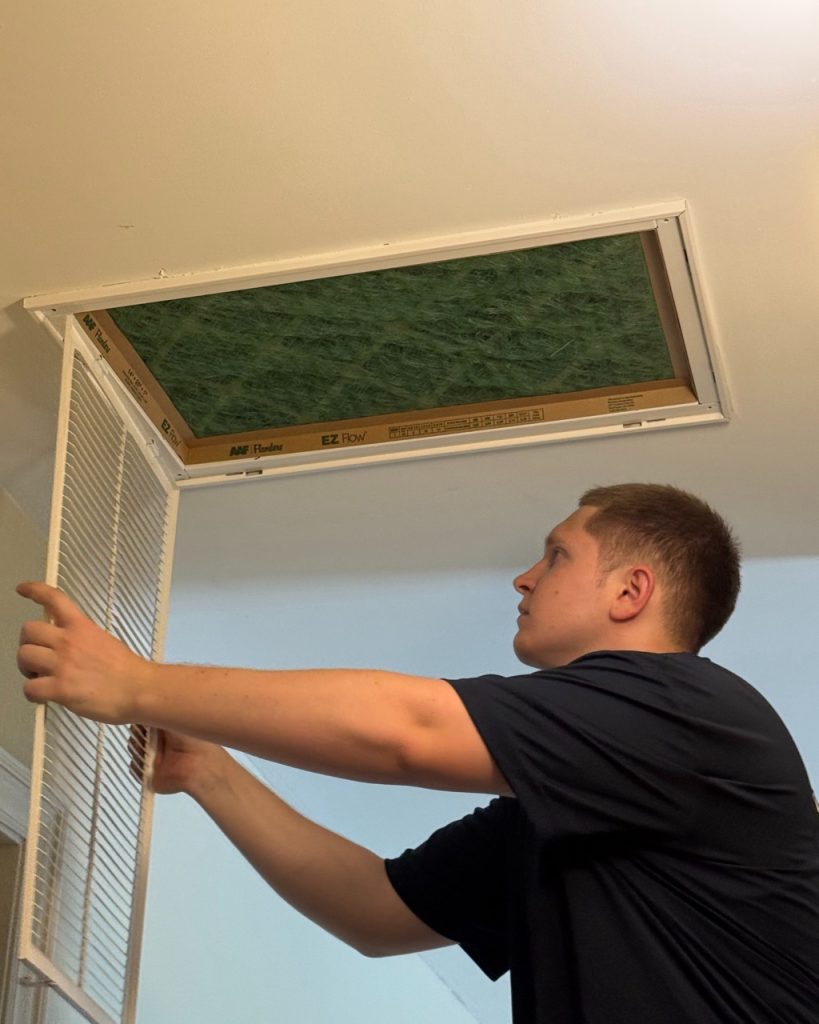
Air filters are designed to capture a wide range of airborne particles before they reach sensitive components like the blower and evaporator coil. The efficiency of that protection depends on the filter itself, how well it fits, and whether it has been replaced on schedule.
During routine inspections, it’s not unusual to find filters that are several months overdue for replacement. In other situations, the filter is clean but doesn’t fit tightly inside its frame, allowing some air to bypass it altogether. Even a small gap can let fine particles continue traveling through the system.
That’s one reason technicians evaluate the entire system instead of focusing on the filter alone. Dust follows the path of moving air, and any weakness in that path can change where particles eventually settle.
Hidden Dust Often Tells a Bigger Story
Dust buildup is sometimes the first visible clue that another issue exists.
One Charlotte homeowner contacted us because two bedrooms always seemed dustier than the rest of the house. They had already changed filters several times and assumed the HVAC equipment was failing.
After inspecting the system, the real cause became clear. A return duct connection inside the attic had partially separated over time. Instead of pulling only conditioned indoor air, the system was also drawing in insulation fibers and attic dust whenever it operated.
Repairing the disconnected section stopped unwanted debris from entering the ductwork, and the difference became noticeable over the following weeks.
Experiences like this reinforce an important point. Excess dust isn’t always caused by dirty ducts alone. Sometimes it’s the result of damaged ductwork, air leaks, or another maintenance issue that can only be identified through a thorough inspection.
Dust Doesn’t Stay Inside the Ducts Forever
Many people assume dust simply collects inside the ductwork and remains there indefinitely.
In reality, the movement of air constantly changes where particles travel.
Some settle inside return ducts where airflow first enters the system. Others reach the air handler before being trapped by the filter. The finest particles may circulate through multiple heating and cooling cycles before eventually settling or being captured.
This ongoing movement explains why some rooms seem dustier than others. Factors such as duct layout, airflow balance, room usage, and even ceiling fan operation can all influence where airborne particles eventually settle.
Understanding this continuous cycle helps homeowners recognize why indoor dust isn’t always connected to housekeeping habits alone.
The Condition of Your Ductwork Matters More Than Many Realize
Not every HVAC system ages the same way.
Older duct systems may have loose connections, worn insulation, or sections that have shifted over time. Newer systems can also develop issues if renovations introduce construction debris or if installation shortcuts create small air leaks.
Charlotte’s combination of seasonal humidity and extended cooling periods means HVAC systems work for much of the year. More operating hours naturally create more opportunities for airborne particles to travel through the duct network.
This is why a professional inspection focuses on more than visible dust. Technicians evaluate airflow, duct integrity, filter condition, and overall system performance to determine whether cleaning, repairs, or routine maintenance would provide the greatest benefit.
Homeowners interested in improving overall indoor air quality often choose to pair duct maintenance with professional dryer vent cleaning because both services support better airflow and help keep household systems operating efficiently.
Professional Cleaning Is More Thorough Than Most People Expect
Some people picture air duct cleaning as little more than vacuuming around the vent openings.
A professional service is considerably more comprehensive.
The process usually begins with an inspection to evaluate the condition of the ductwork and identify any concerns that could affect cleaning. Specialized equipment then creates powerful negative pressure while rotary brushes, compressed-air tools, and other professional equipment loosen accumulated debris from interior duct surfaces.
Companies that follow the National Air Duct Cleaners Association (NADCA) standards perform cleaning according to recognized industry best practices. Those guidelines help ensure debris is safely removed from the system instead of simply being pushed farther into the ductwork.
Knowing what a complete service includes allows homeowners to make informed decisions and better understand the value of hiring trained professionals.
Everyday Habits That Influence How Much Dust Circulates
Once homeowners understand how dust moves through an HVAC system, the next question is usually, “What can I do to slow it down?”
The answer isn’t one single solution. It’s a combination of good maintenance habits that reduce the amount of airborne debris entering the system in the first place.
Replacing air filters on schedule remains one of the simplest steps. Vacuuming with a HEPA-filter vacuum can capture fine particles before they reach the return vents. Keeping supply and return registers free from furniture or rugs also allows air to move more evenly throughout the house.
Another habit that’s often overlooked is cleaning after home improvement projects. Drywall dust, sawdust, insulation fibers, and other construction materials can remain suspended long after the work appears finished. Taking time to protect return vents during renovations and having the HVAC system inspected afterward can prevent those materials from circulating for months.
Sometimes Dust Is a Symptom, Not the Problem
An experienced technician learns that visible dust isn’t always the issue needing attention.
During one service appointment, the complaint centered around excessive dust collecting in a newly finished basement. The owners believed the ductwork simply needed cleaning.
The inspection revealed something different.
The basement renovation had included new duct extensions, but one section hadn’t been properly sealed. Instead of moving conditioned indoor air efficiently, the system was drawing fine particles from an unfinished utility space every time it operated.
Cleaning the ductwork certainly helped, but sealing the disconnected section solved the source of the problem.
Situations like this demonstrate why a thorough inspection matters. Dust often points toward a larger issue involving airflow, duct condition, or system performance rather than being the only concern.
What Homeowners Can Expect From a Professional Inspection
Not every inspection ends with a recommendation for air duct cleaning.
Sometimes the ductwork is in good condition, and the technician recommends improving filter maintenance or addressing a minor air leak instead. Other inspections uncover construction debris, disconnected duct sections, or buildup that justifies a professional cleaning.
A quality inspection should explain what was found, why it matters, and what options are available without creating unnecessary concern.
That homeowner-first approach helps people make informed decisions based on the actual condition of their HVAC system instead of assumptions.
For Charlotte residents looking for information about local services and common maintenance needs, the Charlotte service area page offers additional guidance tailored to homes throughout the region.
Understanding Dust Helps You Protect Your HVAC System
Dust will always be part of everyday life. Every family brings it indoors through normal daily activities, and every heating and cooling system moves a certain amount of airborne particles during operation.
The important difference is understanding when normal dust becomes a sign that the HVAC system deserves closer attention.
Knowing how dust travels through filters, ductwork, and mechanical components helps homeowners make better maintenance decisions while avoiding unnecessary worry. When inspections identify buildup, damaged ductwork, or airflow concerns, addressing those issues early often supports better system performance and a cleaner indoor environment over time.
For homeowners in Charlotte, Pristine Air Duct Cleaners provides professional inspections and Air Duct Cleaning Services Charlotte, NC, using industry-recognized practices. If you have questions about your system or would like an experienced technician to evaluate its condition, visit the contact page to schedule an appointment.
Frequently Asked Questions
1. What happens to dust after it enters my air duct system?
Dust travels through the return vents and into the HVAC system. Larger particles may settle inside sections of the ductwork, while finer particles continue circulating until they’re captured by the air filter or removed during routine maintenance.
2. Can dirty air ducts make my home seem dustier?
Yes, they can contribute to the problem. If dust has accumulated inside the ductwork or there’s a leak allowing debris into the system, particles may continue circulating through your living spaces. However, everyday activities, pets, and outdoor contaminants also play a role.
3. Why does my house get dusty so quickly after I clean?
Several factors can cause dust to return quickly, including an overdue air filter replacement, heavy foot traffic, pets, seasonal pollen, recent remodeling, or issues within the ductwork. A professional inspection can help determine whether the HVAC system is contributing to the problem.
4. Does changing my HVAC filter eliminate dust inside the ducts?
Replacing the filter regularly helps reduce airborne particles, but it doesn’t remove dust that’s already settled inside the ductwork. Filters are designed to capture contaminants moving through the system, not clean existing buildup.
5. How does Charlotte’s climate affect air ducts?
Charlotte experiences long cooling seasons, humid summers, and heavy spring pollen. Because HVAC systems operate for much of the year, they move large volumes of air through the ductwork, which can increase the amount of dust and seasonal particles circulating indoors.
6. Should I have my air ducts inspected after remodeling my home?
Yes. Construction projects often create fine drywall dust, wood particles, and insulation fibers that can enter the HVAC system. An inspection after major renovations can determine whether debris has collected inside the ductwork.
7. How do professionals know if air duct cleaning is necessary?
A trained technician inspects the condition of the ductwork, evaluates airflow, checks for visible debris, and looks for issues such as disconnected ducts or excessive buildup. Recommendations should be based on the actual condition of the system rather than a fixed schedule.
8. How often should residential air ducts be professionally evaluated?
There isn’t a universal timeline. Homes with pets, recent renovations, older HVAC systems, or heavy seasonal use may benefit from more frequent inspections. A professional evaluation helps determine what your specific system needs.
9. What are some simple ways to reduce dust inside my home?
Replacing HVAC filters on schedule, vacuuming with a HEPA-filter vacuum, keeping vents unobstructed, sealing air leaks, and scheduling periodic HVAC maintenance can all help reduce the amount of dust circulating indoors.
Ready to breathe cleaner air? Get your free estimate from Charlotte’s #1-rated air duct cleaning team