
A Charlotte resident recently called about a problem that felt impossible to solve. Every weekend was spent dusting furniture, wiping down shelves, and vacuuming floors. By the middle of the following week, a thin layer of dust had already returned. The homeowner assumed nearby construction was to blame, but a closer inspection revealed something different. Several supply vents contained visible debris buildup, the air filter was undersized for the equipment, and years of accumulated dust were circulating whenever the heating and cooling equipment ran.
Situations like this are more common than many people realize. Dust is a normal part of daily life, but when it seems to reappear almost immediately after cleaning, there is usually an underlying cause. Understanding where that dust comes from and how it moves through a living space can help explain why some residences remain dusty despite consistent housekeeping.
For families dealing with persistent dust problems, the answer is often more complicated than simply cleaning more often.
Dust Does Not Always Come From Outside
One of the biggest misconceptions is that most dust enters from outdoors. While pollen, dirt, and other particles certainly make their way inside, a significant portion of household dust originates indoors.
Dust typically contains:
- Fabric fibers from clothing and furniture
- Pet dander
- Human skin cells
- Carpet fibers
- Paper particles
- Pollen and outdoor debris
- Cooking residue
Over time, these particles accumulate throughout the structure. Every time someone walks across a carpet, sits on a sofa, or opens a door, small particles become airborne again.
In Charlotte, seasonal pollen can add another layer of dust-like material during certain times of the year. Spring often brings heavy pollen accumulation that can enter through open doors, windows, and ventilation systems.
This is one reason many residents searching for information about improving indoor air circulation and cleanliness begin looking beyond traditional cleaning methods.
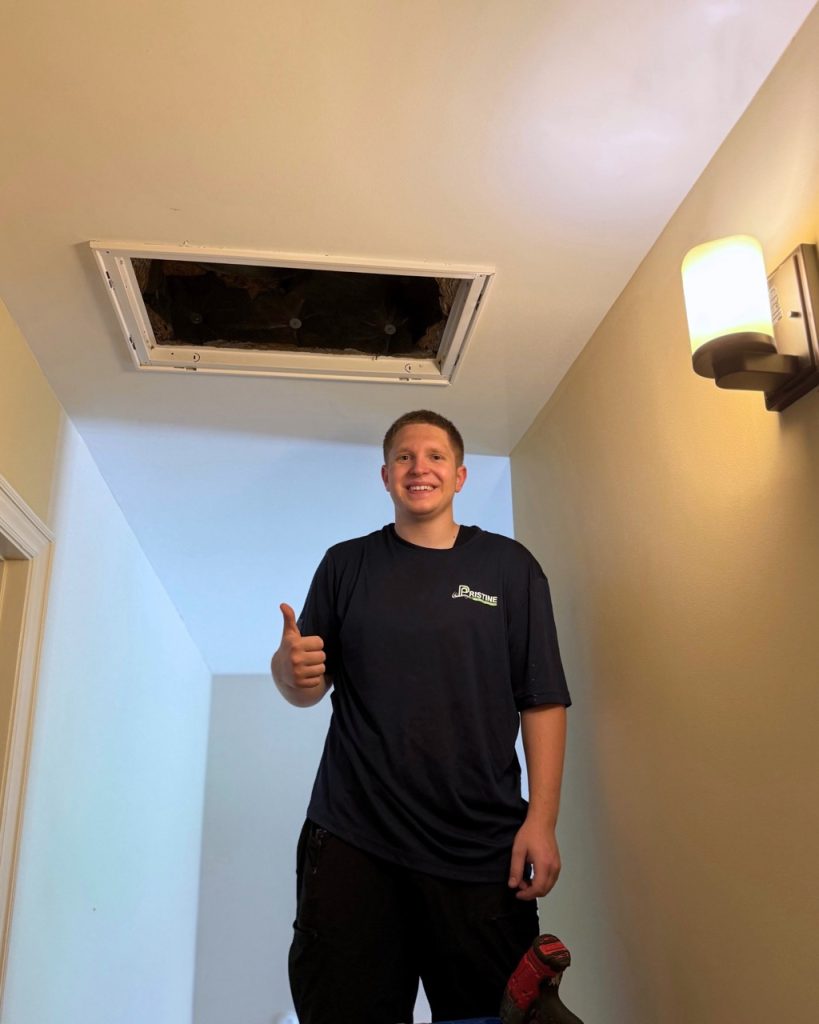
The Hidden Role of Air Ducts
Many people spend years cleaning visible surfaces without considering what may be happening inside the ductwork.
Air ducts function like the respiratory pathways of a building. Conditioned air travels through these passages multiple times every day. As air moves through the network, dust particles can settle inside the ducts.
This does not automatically mean every duct requires cleaning. However, significant accumulation can contribute to recurring dust problems under certain conditions.
During inspections, it is not unusual to find supply vents coated with dust deposits that have built up over many years. When the heating or cooling system cycles on, some of these particles can be redistributed into occupied spaces.
Professional evaluations often focus on whether the buildup is substantial enough to justify service rather than assuming every system requires immediate attention.
That distinction matters because effective Air Duct Cleaning should be based on actual conditions, not assumptions.
Air Filters May Not Be Doing Their Job
A surprising number of dust complaints trace back to filtration issues.
Sometimes the filter is overdue for replacement. In other situations, the filter is too thin or improperly sized for the equipment.
One inspection involved a newer Charlotte residence where the occupants felt frustrated by constant dust accumulation despite weekly cleaning. After examining the mechanical system, it became clear that air was bypassing portions of the filter due to gaps around the filter housing.
Dust that should have been captured was instead circulating through the system.
The practical takeaway was simple: even a high-quality filter cannot perform properly if air finds ways around it.
Routine filter checks remain one of the easiest and most cost-effective maintenance tasks available.
Leaky Ductwork Can Pull In Additional Debris
Not every dust problem begins inside the living area.
Duct leaks located in attics, crawl spaces, or utility areas can allow unwanted particles to enter the air distribution network.
Attics often contain insulation fibers, dust, and other debris. If return ducts develop gaps or loose connections, the system may pull contaminated air into circulation.
This issue can be especially noticeable in older neighborhoods where mechanical systems have undergone multiple repairs over the years.
When evaluating excessive dust complaints, experienced technicians often inspect accessible duct connections before recommending solutions.
A thorough assessment of the entire air delivery system frequently reveals problems that are not visible from inside the occupied areas.
Charlotte’s Climate Plays a Bigger Role Than Many Realize
Local weather conditions can influence indoor dust levels more than people expect.
Charlotte experiences humid summers, seasonal pollen activity, and periods of heavy HVAC usage throughout the year. These factors create conditions where airborne particles can accumulate faster than in some other regions.
Humidity can cause dust particles to cling to surfaces. Pollen seasons can introduce significant amounts of fine material into occupied spaces. Frequent heating and cooling cycles can increase air movement, which redistributes particles that have settled.
Residents interested in understanding local service recommendations can explore information about conditions affecting properties throughout the Charlotte service area.
Local environmental factors rarely create dust problems by themselves, but they often contribute to existing issues.
Carpets, Upholstery, and Pets Can Act Like Dust Reservoirs
Sometimes the HVAC system gets blamed when the real source is elsewhere.
Soft surfaces naturally collect particles over time. Carpets, area rugs, curtains, mattresses, and upholstered furniture all trap dust.
Pets add another layer of complexity.
Even well-groomed animals shed dander and hair continuously. These materials can become airborne and settle throughout the structure.
A residence with multiple pets may require more frequent vacuuming, filter replacement, and maintenance compared to a similar property without animals.
This does not mean pets are the problem. It simply means more particles are being introduced into the indoor environment every day.
Recognizing these contributing factors helps create realistic expectations about dust control.
Dryer Vents Are Sometimes Overlooked
Dust complaints occasionally reveal another maintenance issue entirely.
While dryer systems are separate from ductwork used for heating and cooling, neglected dryer vents can contribute lint and fine particles around laundry areas.
During inspections, accumulated lint is sometimes discovered around vent connections or improperly sealed exhaust pathways.
Keeping the dryer exhaust system clean is an important part of overall household maintenance. Information about maintaining these systems can be found through professional dryer exhaust maintenance services.
Although dryer vents are not usually the primary source of whole-house dust, they can contribute to localized buildup.
What Professional Air Duct Cleaning Charlotte Services Actually Address
There is a misconception that cleaning ductwork instantly eliminates every dust issue.
In reality, dust control is usually a combination of factors.
When substantial debris accumulation exists inside ductwork, Professional Air Duct Cleaning Charlotte services may help reduce one source of circulating particles. At the same time, filtration, humidity control, housekeeping practices, and equipment maintenance all play important roles.
Industry organizations such as NADCA provide standards and guidance that help professionals determine when cleaning is appropriate and how the work should be performed.
Qualified providers focus on inspection findings rather than blanket recommendations.
That approach tends to produce better long-term results because it addresses actual causes instead of symptoms.
Signs That Dust May Be Linked to Your HVAC System
Persistent dust does not automatically mean duct cleaning is necessary.
However, certain observations can indicate that a closer inspection may be worthwhile.
These include:
- Dust appears shortly after cleaning
- Visible buildup around supply registers
- Excessive debris near vents
- Recent renovation work
- Noticeable dust when the system starts
- Long periods without system maintenance
- Uneven cleanliness between rooms
When several of these signs appear together, further evaluation often makes sense.
This is where HVAC Air Duct Cleaning Charlotte professionals can help determine whether the ductwork is contributing to the issue.
A Practical Approach to Reducing Dust
The most successful dust-reduction strategies usually involve multiple steps.
Start by:
- Replacing filters on schedule
- Vacuuming with a quality filtration system
- Reducing clutter that collects dust
- Managing indoor humidity levels
- Inspecting ductwork for leaks
- Addressing ventilation issues
- Scheduling inspections when problems persist
These actions can significantly improve conditions without relying on a single solution.
For some properties, Residential Air Duct Cleaning Charlotte, NC may become part of that plan when inspection findings support it.
Others may discover filtration or maintenance concerns that have a greater impact.
The key is identifying the actual source rather than guessing.
Final Thoughts
After inspecting hundreds of systems, one pattern becomes clear: recurring dust is usually the result of several contributing factors working together rather than a single hidden problem.
A clean-looking living space can still contain filtration issues, duct leaks, excessive debris accumulation, or environmental influences that continuously reintroduce particles. Understanding those factors helps explain why cleaning alone does not always solve the problem.
For guidance tailored to your situation, consider reaching out through the local service team contact page.
FAQ Section
Why does my house get dusty again right after cleaning?
Rapid dust buildup often points to filtration issues, duct leakage, heavy indoor particle sources, or seasonal environmental conditions rather than housekeeping habits alone.
Can dirty air ducts make a home feel dustier?
In some situations, significant debris accumulation inside ductwork may contribute to recurring dust when the HVAC equipment operates.
How often should air ducts be inspected?
Inspection frequency varies, but many professionals recommend evaluating ductwork when indoor air quality concerns, excessive dust, renovations, or HVAC performance issues arise.
Does Charlotte pollen contribute to indoor dust?
Yes. Seasonal pollen can enter through doors, windows, and ventilation systems, adding to overall particle levels inside living spaces.
Can pets increase household dust?
Pets shed hair and dander continuously, which can contribute to dust accumulation throughout the home.
Will changing my air filter reduce dust?
A properly sized and regularly replaced filter can help capture airborne particles before they circulate through the HVAC equipment.
What are the signs I may need Air Duct Cleaning Charlotte, NC services?
Visible debris around vents, excessive dust, renovation residue, and unusual buildup inside ductwork may indicate the need for a professional evaluation.
Can duct leaks cause dust problems?
Yes. Leaky return ducts can pull dust, insulation particles, and debris from attics or crawl spaces into the air distribution system.
Is professional duct cleaning recommended for every home?
No. Recommendations should be based on inspection findings rather than age alone. Some systems require cleaning while others may not.
How do I know which dust source is affecting my home?
A comprehensive inspection of filtration, ductwork, ventilation, and indoor conditions is often the best way to identify the primary contributors.
Ready to breathe cleaner air? Get your free estimate from Charlotte’s #1-rated air duct cleaning team